Hard Floor Cleaning in Canary Wharf
Hard floor cleaning in Canary Wharf needs to do more than make a floor look tidy for a day. In a place like Canary Wharf, where busy apartments, managed buildings, shared entrances, offices, retail units, and hospitality spaces all see constant foot traffic, floors need careful attention, the right equipment, and a practical service schedule that fits real life. Whether your surface is stone, tile, vinyl, wood, laminate, sealed concrete, terrazzo, or another hard-wearing finish, the goal is the same: a cleaner, safer, better-looking floor that is easier to maintain.
If you are comparing options for hard floor cleaning Canary Wharf residents and businesses can rely on, it helps to know what a proper service should include. A good local team understands building access, concierge procedures, lift use, service entrances, loading restrictions, and the fact that many properties in this part of East London have limited parking or strict time windows for work. That local awareness matters, especially when floors are part of a high-spec apartment, a modern office, or a customer-facing space where appearance and hygiene both count.
This page explains what the service involves, how it helps different property types, what affects the price, and how to prepare for a visit. It is designed for real customers who want a straightforward answer and a simple next step: request a free quote, contact us today, or book your service now.
Why hard floor care matters in Canary Wharf

Canary Wharf is a unique area for floor maintenance because the environment creates constant wear. Office workers, residents, visitors, contractors, and delivery teams all pass through the same entrances, lifts, corridors, and communal spaces. Dirt from shoes, grit from the streets, moisture from wet weather, and spills from food or drink can all build up quickly. Even when a floor looks “fine” at first glance, it may still have a dull film, embedded grime, or small scuffs that make a property feel less polished.
Hard floor cleaning is not just about appearance. It also supports hygiene, helps reduce slip risks, and protects the finish of the flooring itself. Regular sweeping or mopping is useful, but it rarely reaches the build-up that forms in grout lines, textured surfaces, corners, edges, and high-traffic walkways. That is why many Canary Wharf customers choose a specialist service rather than trying to manage everything with standard cleaning alone.
In residential blocks, clean hard floors can make entrances, lobbies, corridors, and communal areas feel more welcoming. In commercial spaces, they can improve first impressions for clients, staff, and visitors. In both cases, the right cleaning method helps maintain the value of the surface and can reduce the need for more disruptive remedial work later on.
Types of hard floors we clean

Different flooring materials need different treatment. A floor that responds well to one method may be damaged by another, so the first step is always to identify the material and its condition. A sensible service approach will never treat every surface the same way.
Common hard floor finishes in Canary Wharf properties include:
- Tile and grout in kitchens, washrooms, receptions, and communal areas
- Natural stone such as marble, limestone, slate, granite, and travertine
- Vinyl and safety flooring in offices, retail units, and shared facilities
- Laminate and engineered wood in apartments and fitted living spaces
- Sealed concrete in modern commercial and industrial-style interiors
- Terrazzo in upgraded or architecturally designed spaces
Each of these surfaces has its own cleaning needs. For example, stone may need a pH-appropriate treatment to avoid dulling, while vinyl often benefits from residue-free cleaning that restores a clean, even finish. Wood and laminate need controlled moisture and careful technique so the floor is cleaned without swelling, streaking, or edge damage. A local specialist should explain what they are doing and why, rather than simply arriving with a one-size-fits-all method.
Good floor care starts with the right assessment. That includes checking wear patterns, identifying stains, looking at previous sealants or polishes, and making sure the chosen process suits the flooring and the location.
What our hard floor cleaning service includes

When customers ask what is included in a professional service, they usually want to know whether the job will be more than a quick mop and wipe. The answer should be yes. Proper hard floor cleaning usually combines inspection, preparation, deep cleaning, and finishing steps tailored to the surface.
A typical service may include:
- Initial assessment of the floor type, condition, stains, and traffic levels
- Dry debris removal such as dust, grit, and loose dirt
- Targeted pre-treatment for marks, spills, and high-use areas
- Machine or manual deep cleaning depending on the material and space
- Detail cleaning around edges, corners, thresholds, and fixtures
- Rinse or residue removal where required to avoid a sticky finish
- Optional sealing or finishing advice for surfaces that benefit from extra protection
For some floors, the service may also include scrubbing and extraction, burnishing, mopping with suitable solutions, or low-moisture methods to minimise drying time. The aim is to match the method to the flooring, not force the flooring to match the method.
For managed properties in Canary Wharf, this kind of detailed work is especially valuable in entrance halls, lift lobbies, post-room areas, communal kitchens, and shared corridors where the same floors are used all day and need a more durable cleaning plan.
Residential hard floor cleaning for Canary Wharf apartments

Canary Wharf homes often feature sleek, modern interiors, open-plan layouts, and attractive hard flooring that plays a big role in the look and feel of the space. Whether you live in a high-rise apartment, a riverside development, or a managed block near the estate, keeping floors in good condition can make the whole property feel brighter and more comfortable.
Residential customers often look for help with:
- Kitchen floors that pick up grease, food marks, and tracked-in dirt
- Hallways and entrances that show scuffs and mud quickly
- Living area flooring that has lost its shine
- Bathroom tiles and grout that need deeper cleaning
- Wood or laminate floors that look dull because of residue or daily wear
In apartment buildings, access can be a real consideration. A local company working in Canary Wharf should be ready for concierge arrangements, lift bookings, time restrictions, and careful coordination with building management. That matters because a smooth visit reduces stress for residents and helps the job get done efficiently.
Many residents also appreciate quieter, low-disruption methods, especially when working from home or managing family routines. A floor-cleaning visit should feel organised, respectful, and practical from start to finish.
Commercial hard floor cleaning for offices, shops, and shared spaces
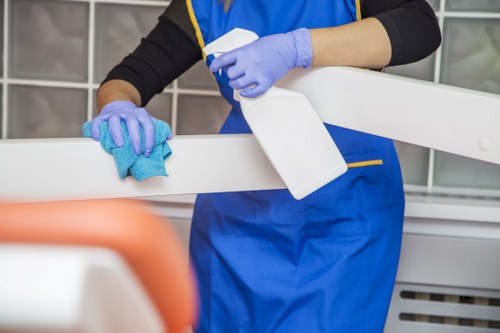
Canary Wharf is known for its commercial activity, and that means hard floors in offices, reception areas, retail units, cafés, and hospitality venues often face heavier use than domestic flooring. Staff and customers bring in dust, water, sand, and debris throughout the day, and floors can quickly start looking tired even if they are cleaned regularly.
Commercial customers often need a service that works around business hours. Early starts, evening appointments, and planned visits can help avoid disruption to staff and visitors. A local team with experience in the area is more likely to understand common building procedures, security requirements, and the practical need to keep entrances and walkways clear.
In a business setting, the condition of the floor is tied closely to the overall impression of the premises. Clean, well-maintained flooring helps create a professional environment and supports a sense of order and care. That applies whether you are managing a corporate suite, a small office, a shared workspace, or a customer-facing unit.
For many businesses, the most useful service is not a one-off clean alone, but a floor care plan. That might involve scheduled visits, maintenance cleaning, and advice on keeping the surface in better shape between services.
Why choose a local Canary Wharf company
Choosing a local company for hard floor cleaning in Canary Wharf has practical advantages. A team familiar with the area is more likely to understand the day-to-day realities of working in a busy docklands district. That includes building access rules, visitor management systems, restricted parking, loading bays, and the need to work neatly in shared environments.
Local knowledge also helps when planning around nearby areas and property types. Canary Wharf sits close to places such as Poplar, Limehouse, Blackwall, Isle of Dogs, South Quay, and parts of Docklands, and all of these locations can have their own access patterns and building layouts. A nearby service provider can often plan visits more efficiently and respond more flexibly when the job needs a careful timetable.
Another benefit is consistency. A local team may be better placed to return for maintenance cleaning, seasonal deep cleans, or one-off refreshes after renovation, tenant changeover, or a busy trading period. That makes it easier to protect flooring over time rather than waiting until it visibly deteriorates.
For many customers, the biggest reason to choose local is simple: it is easier to arrange, easier to coordinate, and easier to keep on top of regular floor care.
How the service works
A straightforward process for homes and businesses
A professional floor-cleaning appointment should be easy to understand. While every floor is different, the overall process is usually similar and should be explained clearly before work begins.
Typical steps include:
- Enquiry and floor details – You describe the flooring type, size of the area, and any issues such as staining, dullness, or heavy traffic.
- Site assessment – The team checks the surface, access requirements, and any practical concerns such as furniture, parking, or building rules.
- Method selection – The cleaning approach is chosen based on the material and its condition.
- Cleaning and detailing – The floor is cleaned, edges are treated, and problem areas are given extra attention.
- Final check – The result is reviewed to make sure the floor looks clean, even, and suitable for normal use.
Some customers ask whether a floor can be used again immediately after cleaning. That depends on the surface, the products used, and the drying time required. A reliable team will always explain what to expect so you can plan accordingly. If a floor needs time to dry fully, it is better to know in advance than to be surprised after the work is done.
Common flooring problems we help with
Stains, dullness, and everyday wear
Many customers contact a floor-cleaning service because their flooring does not look how it used to, even if they keep up with regular cleaning. This is very common in active properties, especially in a place as busy as Canary Wharf.
Typical problems include:
- Embedded dirt in grout, joints, or textured surfaces
- Scuff marks from shoes, furniture, or trolleys
- Grease and food marks in kitchens and break areas
- Water staining or residue from spills and frequent mopping
- Dull patches in areas with heavier foot traffic
- Slip concerns where build-up has affected the surface finish
- Uneven appearance caused by old cleaning residues or wear
These issues do not always mean the floor is damaged. In many cases, the surface simply needs a more thorough clean with the correct technique. That is one of the main reasons professional hard floor cleaning is so useful: it can revive a floor that has become tired through normal daily use.
Preparation checklist before your appointment
Simple steps that help the visit go smoothly
There is usually not much you need to do before the team arrives, but a few small steps can save time and help the work run smoothly. If you are arranging hard floor cleaning for an apartment, office, or shared area, the following checklist is a good place to start.
- Clear small loose items such as mats, boxes, bins, or portable furniture where possible
- Let the building management or concierge know if access arrangements are needed
- Point out problem areas such as stains, scuffs, or especially worn sections
- Protect sensitive belongings by moving fragile items out of the area if practical
- Check parking or loading instructions if the building has restrictions
- Tell the team about any special flooring history, such as recent sealing, polishing, or repairs
If the floor is in a communal space or business premises, it is also helpful to make sure anyone affected by the work knows the expected timings. That can reduce interruptions and make the appointment feel well-managed from the start.
Tip: If you are unsure whether something should be moved, cleaned separately, or left in place, ask before the visit. A quick conversation can prevent delays.
What affects the price of hard floor cleaning?
Factors customers should understand before requesting a quote
Every floor and property is different, so pricing is usually based on a number of practical factors rather than a fixed one-size-fits-all rate. This is especially true in Canary Wharf, where access, parking, and building rules can vary significantly from one property to another.
Common pricing factors include:
- Floor type – stone, tile, vinyl, wood, laminate, terrazzo, or concrete all require different techniques
- Area size – larger floors usually need more time and equipment
- Condition – heavy soiling, stubborn stains, and long-term build-up can increase the work involved
- Access requirements – lift access, concierge coordination, or limited parking may affect planning
- Service timing – out-of-hours visits for businesses may require a different schedule
- Extra treatments – sealing, polishing, or specialist attention to grout or edges may be additional factors
A proper quote should be based on clear information about the floor and the space. If the area is large or has unusual access, it may help to share photos or a short description when you enquire. That allows the team to give a more accurate idea of what is needed.
Areas covered around Canary Wharf
Our hard floor cleaning services are suitable not only for Canary Wharf itself, but also for nearby locations where similar property types and access needs are common. Customers often come from surrounding parts of East London where modern apartments, commercial offices, retail spaces, and shared developments all rely on regular floor care.
Nearby areas commonly covered include:
- South Quay
- Poplar
- Blackwall
- Isle of Dogs
- Limehouse
- Millwall
- Canary Riverside
- parts of Docklands and nearby East London developments
This is useful for customers who want a team that already understands the area’s building layouts and working conditions. In practice, that can mean better planning, smoother access, and fewer surprises on the day.
If you are not sure whether your property is covered, it is worth asking. Many local services can handle both residential and commercial jobs across the immediate neighbourhood and surrounding districts.
Why regular floor maintenance pays off
Protecting the surface as well as the appearance
It is easy to think of floor cleaning as a cosmetic task, but regular maintenance can do much more than improve how a space looks. It can help preserve the material, reduce premature wear, and keep the floor easier to clean in future. That is particularly important in high-traffic buildings where small issues can become noticeable quickly.
For example, if grit is allowed to build up, it can scratch certain finishes over time. If residue is left behind after routine mopping, it can dull the surface and make it feel tacky or uneven. If grout is not cleaned properly, it may darken and make the whole room look older than it is. A planned maintenance approach helps avoid these problems.
In commercial settings, this can also support a cleaner and more professional environment for staff and customers. In homes, it can make day-to-day cleaning easier and help the property feel fresher for longer. In both cases, the aim is not just a short-term improvement but a better long-term result.
Frequently asked questions
Real questions from local customers
How often should hard floors be professionally cleaned?
It depends on traffic levels, floor type, and how the property is used. Busy commercial entrances may need more frequent care than a lightly used apartment floor. A local team can advise based on the actual condition of the surface.
Can you clean floors in apartment buildings with restricted access?
Yes, provided access is arranged in advance. Many Canary Wharf buildings have concierge desks, lift booking rules, or limited service windows, so planning is important.
Is this suitable for both homes and businesses?
Yes. Hard floor cleaning is useful for residential apartments, communal areas, offices, shops, hospitality spaces, and managed buildings.
Will the floor be wet for long after cleaning?
Drying time depends on the floor type, cleaning method, ventilation, and the amount of moisture used. If low-moisture methods are suitable, they may reduce downtime.
Do I need to move furniture?
Sometimes, but not always. Small loose items are usually best removed beforehand. For larger items, the team can often work around them or advise on the best arrangement before the visit.
Can you help with stained grout or dull stone?
Often yes, although the result will depend on the material, the history of the surface, and how long the problem has been present. It is always best to share photos or a clear description when enquiring.
What makes a good floor-cleaning service?
When choosing a provider for hard floor cleaning in Canary Wharf, look for a service that is practical, transparent, and respectful of the property. The best teams do not rush the assessment, do not guess at the flooring type, and do not use the same method everywhere without checking suitability first.
A reliable service should be able to explain:
- What type of flooring you have
- What cleaning method is likely to suit it
- How long the work will take
- What preparation is needed
- Any access or drying-time considerations
- Which areas need extra attention
That level of clarity is useful for both householders and business managers. It helps you plan the appointment confidently and decide whether a one-off clean or a recurring maintenance schedule is the better fit.
Most customers are looking for a simple outcome: a floor that looks better, feels cleaner, and is easier to look after afterwards.
Book your hard floor cleaning in Canary Wharf
If your floors are looking dull, marked, or harder to maintain than they should be, now is a good time to arrange professional help. Whether you need a one-off deep clean for an apartment, regular maintenance for a commercial property, or targeted treatment for a problem area, a local service can provide the right approach.
Choosing a specialist for hard floor cleaning Canary Wharf means choosing someone who understands the local environment, the building access challenges, and the need to keep disruption low. From modern residential towers to busy business premises, the right cleaning plan can make a noticeable difference to appearance, hygiene, and day-to-day upkeep.
Contact us today to request a free quote, ask about your flooring type, or arrange a visit at a time that suits your property. If you are ready to improve the look and feel of your space, book your service now and take the next step toward cleaner, better-maintained floors.